
Tennessee Auto Insurance in 2026: Your Ultimate Guide to Lower Rates
Navigating the complexities of auto insurance in Tennessee can often feel like a challenging endeavor. As you look ahead to 2026, understanding the current landscape, anticipating upcoming shifts, and implementing smart strategies are paramount to securing affordable coverage. This guide offers a comprehensive roadmap, designed to equip Tennessee drivers with the knowledge and tools necessary to lower their auto insurance rates and ensure they are adequately protected on the road. From understanding state mandates to leveraging discounts and choosing the right insurance companies, we'll cover all essential aspects to help you secure the best car insurance deal for your vehicle. By understanding the interplay of factors that influence your premiums and adopting proactive strategies, you can gain control over your auto insurance costs and drive with greater peace of mind.
Why 2026 Matters for Your Auto Insurance Rates
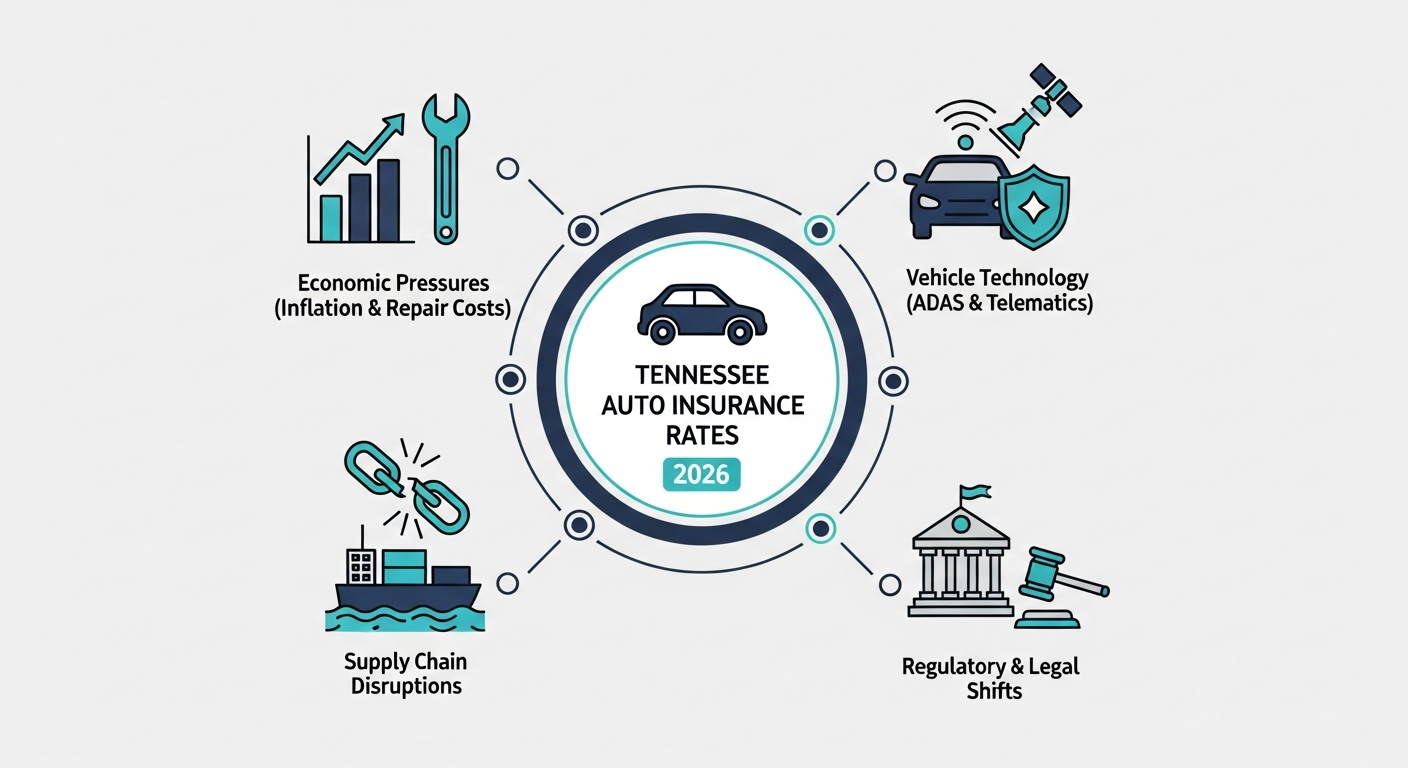
A confluence of economic, technological, and regulatory factors will shape Tennessee auto insurance premiums in 2026.
The year 2026 presents a unique confluence of economic, technological, and regulatory factors that will significantly influence Tennessee auto insurance rates. Economic pressures, including persistent inflation, continue to drive up the cost of vehicle repairs and replacement parts. Supply chain disruptions, though easing, can still impact the availability and price of both new and used vehicles, indirectly affecting premiums. Technologically, advancements like telematics and Advanced Driver-Assistance Systems (ADAS) are becoming more integrated into modern vehicles. These innovations offer the potential for greater safety and personalized pricing, but also introduce new underwriting considerations for insurance companies. Furthermore, potential shifts in Tennessee law or regulatory frameworks could alter the landscape of required coverage and liability. Understanding these dynamics is crucial for Tennessee drivers aiming to secure the most advantageous car insurance policies as we move into 2026.
What This Guide Will Cover
This guide is designed to be your definitive resource for understanding and reducing your auto insurance costs in Tennessee by 2026. We will delve into the state's minimum coverage requirements and explore why exceeding them is often financially prudent. You'll gain insights into the key factors that influence your car insurance premium, from your driving record and credit score to your vehicle and location. Crucially, we will outline actionable strategies for securing lower rates, including maximizing discounts, optimizing your deductible and coverage, and the importance of shopping for the best insurance quotes. We'll also address special situations for drivers, such as high-risk drivers, and provide guidance on selecting a reputable insurance company. Finally, we'll look ahead to emerging trends that could further impact your insurance in the years to come.
Understanding Tennessee's Auto Insurance Requirements in 2026
Understanding Tennessee's legal requirements for auto insurance is the foundational step in navigating the market. These minimums are set by the state to ensure a basic level of financial responsibility for drivers involved in accidents. However, simply meeting these legal obligations may not provide sufficient protection for your assets or yourself in the event of a serious incident. It's imperative to grasp not only what Tennessee law mandates but also why choosing coverage beyond the state minimum is often a wise financial decision for comprehensive protection.
State Minimum Coverage: What Tennessee Law Demands
In Tennessee, all registered drivers must carry a minimum amount of liability insurance. As of the latest information available, these requirements mandate coverage for Bodily Injury and Property Damage. Specifically, you are required to have:
$25,000 per person for bodily injury liability coverage.
$50,000 per accident for bodily injury liability coverage.
$25,000 per accident for property damage liability coverage.
These liability coverages help pay for damages or injuries you cause to others if you are at fault in an accident. Failure to maintain at least this minimum coverage can lead to significant penalties, including fines, license suspension, and mandatory SR-22 filings, which signal to insurance companies that you are a higher-risk driver. It's also important to note that Tennessee requires drivers to carry proof of insurance, which can be in electronic or physical form, to present when requested by law enforcement or during registration renewal. This minimum coverage is the baseline, but it's critical to understand its limitations.
Beyond the Minimum: Why More Coverage Offers Better Protection
While state minimums offer a baseline of compliance, they often fall short of providing true financial security. The average cost of full coverage car insurance in Tennessee is approximately $2,004 per year, while minimum coverage averages $513 annually, according to Bankrate [2025]. Opting for full coverage typically includes collision coverage (to repair your vehicle after an accident) and comprehensive coverage (to cover damages from non-collision events like theft, fire, or vandalism).
The reality is that accident costs can quickly exceed minimum liability limits. A severe car accident, which can occur anywhere in Tennessee—Nashville, for instance, averaged 66 vehicle collisions daily between 2024 and 2025, as noted by The Lawyers of Brown & Roberto—can result in substantial medical bills, lost wages, and property damage. If the costs of an accident exceed your liability limits, you could be personally responsible for the remaining balance, potentially leading to significant financial hardship. Therefore, while minimum coverage fulfills legal requirements, investing in higher coverage limits, comprehensive coverage, and collision coverage for a full coverage policy provides a much-needed safety net.
The "Why" Behind Your Rates: Key Factors Influencing 2026 Premiums
Your auto insurance rate is not a random number; it's a personalized calculation based on a multitude of factors that insurance companies use to assess risk. Understanding these drivers empowers you to make informed decisions and take targeted actions to lower your premiums by 2026. Insurers aim to predict the likelihood of a claim by analyzing various data points associated with you, your vehicle, and your driving habits.
Your Driving Record: The Most Significant Rate Driver
Your driving record is arguably the most influential factor in determining your car insurance rate. A history of accidents, speeding tickets, DUIs, or other traffic violations signals to insurance companies that you are a higher risk. Conversely, maintaining a clean driving record—free of infractions—is the single most effective way to secure lower insurance rates. For example, drivers in Tennessee with a clean driving record pay an average of $1,868 annually, while those with one moving violation pay around $2,583 per year, according to Experian [2026]. This significant jump illustrates the financial benefit of adhering to traffic laws. Furthermore, reckless driving and other serious offenses can lead to classification as a high-risk driver, necessitating SR-22 insurance and substantially higher premiums.
Your Credit Score: A Major Underwriting Factor in Tennessee
In Tennessee, as in many states, insurance companies use credit-based insurance scores to help predict future insurance claims. Generally, individuals with higher credit scores are perceived as more financially responsible and statistically less likely to file claims. Consequently, a good credit score can lead to significantly lower auto insurance premiums. Conversely, a poor credit score may result in higher rates, even with a clean driving record. Improving your credit score through responsible financial management can therefore lead to substantial savings on your car insurance. While regulations exist regarding the use of credit scores, it remains a substantial underwriting factor for many insurance companies.
Your Vehicle: Make, Model, and Safety Features
The vehicle you drive plays a substantial role in your insurance premium. Factors such as the make, model, year, and safety features all contribute to the overall risk assessment. For instance, a Toyota Camry or a Toyota Camry LE, known for their widespread availability and generally good safety records, might have different insurance implications compared to a luxury sports car. High-performance cars, vehicles with higher auto theft rates, or those with expensive repair costs typically command higher premiums. Conversely, vehicles equipped with advanced safety features, such as anti-lock brakes, airbags, and electronic stability control, can often lead to car insurance discounts. The cost to repair your specific vehicle is a significant consideration for insurance companies when setting rates, and insurers like State Farm often take these details into account.
Your Location: Geographic Regions and Urban vs. Rural Differences
Where you live within Tennessee directly impacts your auto insurance rates. Insurance companies analyze data specific to different geographic regions, considering factors such as traffic density, accident frequency, and crime rates (including auto thefts). Urban areas generally experience higher rates due to increased traffic congestion and a greater likelihood of accidents and theft compared to rural areas. Major cities like Nashville, with its high volume of daily collisions, often see higher premiums than smaller towns. Your ZIP code can therefore have a considerable effect on the insurance quotes you receive. Analyzing geographic regions is a key component of an insurer's underwriting process.
Other Driver Profile Factors
Beyond the core factors, several personal attributes influence your insurance rate:
Age and Gender: Younger drivers and males typically face higher premiums due to statistical risk profiles associated with these demographics.
Marital Status: Married individuals often receive lower car insurance rates than single individuals, as studies suggest they tend to be more cautious drivers.
Years of Driving Experience: More experienced drivers generally pay less than new or young drivers due to accumulated safe driving history.
Claims History: A history of filing multiple claims, even if not always at fault, can increase your premium. Insurance companies view a history of frequent claims as a higher risk.
Occupation and Education: Some insurance companies may offer discounts based on your profession or educational background, viewing them as indicators of stability and lower risk.
Strategic Moves to Lower Your Auto Insurance Rates in 2026
Understanding what drives your insurance rate is only half the battle. The other, more empowering half involves actively implementing strategies to reduce your premium. By being proactive and informed, Tennessee drivers can significantly lower their auto insurance costs by 2026. This requires a strategic approach that goes beyond simply accepting the first quote you receive.
Maximize Car Insurance Discounts: Don't Leave Money on the Table
Discounts are one of the most straightforward ways to reduce your car insurance costs. Insurance companies offer a wide array of potential savings. Be sure to inquire about:
Safe Driver Discounts: For maintaining a clean driving record. Many insurers offer programs where you can earn further discounts by allowing them to monitor your driving habits via telematics devices or apps, such as those offered by companies like Liberty Mutual.
Good Student Discounts: For full-time students maintaining a strong academic record.
Multi-Policy Discounts (Bundling): Bundling your auto insurance with homeowners, renters, or other policies from the same insurance company often yields substantial savings. This is a highly effective strategy for overall cost reduction.
Vehicle Safety Feature Discounts: For vehicles equipped with airbags, anti-lock brakes, and other safety features.
Low Mileage Discounts: If you drive fewer than a certain number of miles annually, you may qualify for a discount, especially if you utilize pay-per-mile insurance options.
Defensive Driving Course Discounts: Completing an approved defensive driving course can often earn you a discount on your premium.
Anti-Theft Device Discounts: Installing anti-theft systems in your vehicle can also qualify you for savings.
New Car Discounts: Some insurers offer discounts for newer vehicles, especially those with advanced safety features.
Optimizing Your Deductible and Coverage Limits
The relationship between your deductible and your premium is inverse: a higher deductible generally means a lower premium, and vice-versa. While a lower premium is appealing, ensure your chosen deductible is an amount you can comfortably afford to pay out-of-pocket should you need to file a claim. For instance, if you have a higher deductible on your comprehensive or collision coverage, you might save money on your monthly premium. However, consider the financial implications if an incident occurs.
Similarly, reassess your coverage limits. While state minimums are the legal requirement, increasing your bodily injury liability and property damage liability limits can offer far greater protection against large financial losses. Obtaining an insurance quote with higher liability limits may reveal that the increase in your premium is modest compared to the substantial increase in protection against potentially catastrophic financial exposure in the event of a serious car accident. A full coverage policy with adequate liability coverage is key to comprehensive protection.
Maintain a Stellar Driving Record: Your Best Long-Term Strategy
As mentioned, your driving record is paramount. Beyond the immediate impact on your current premium, infractions can have long-lasting consequences. A clean driving record not only keeps your rates lower but also makes you a more attractive customer to all insurance companies, increasing your options and bargaining power. Focus on safe driving habits: avoid speeding, refrain from distracted driving—which affected 1 in 15 Tennessee drivers in crashes in 2023, according to the Tennessee Highway Patrol—and always drive sober. This is the most reliable long-term strategy for consistently affordable auto insurance. Even a single speeding ticket can significantly increase your rates for years.
Special Situations and Tailored Solutions for Tennessee Drivers
While general strategies apply broadly, certain drivers face unique circumstances that require specialized approaches to secure appropriate and affordable auto insurance. Navigating these situations effectively can lead to better coverage and financial outcomes.
Navigating High-Risk Driver Insurance (Including SR-22)
If you have a history of serious traffic violations, accidents, or DUIs, you may be classified as a high-risk driver. This classification typically results in significantly higher insurance rates. In Tennessee, such drivers may be required to file an SR-22 form, which is a certificate of financial responsibility proving you have the legally mandated minimum coverage. Obtaining SR-22 insurance can be challenging, as many standard insurance companies may refuse coverage. However, specialized insurance companies and non-standard market providers focus on serving high-risk drivers. While premiums will likely be higher, maintaining continuous coverage and a clean driving record moving forward is essential for eventually lowering these costs and potentially removing the SR-22 requirement. Companies like Direct Auto often cater to these needs.
Bundling for Maximum Savings: Auto, Home, and Beyond
One of the most effective ways to reduce your overall insurance costs is through bundling. Most major insurance companies offer discounts when you purchase multiple policies from them. This typically includes bundling your auto insurance with homeowners insurance, renters insurance, or even motorcycle or boat insurance. By consolidating your policies with a single insurer, you simplify your insurance management and can unlock significant savings, often ranging from 5% to 20% or more on each policy. This strategy is particularly beneficial for homeowners looking to cover both their property and their vehicles. Insurance companies like Nationwide and Farmers Insurance often provide attractive bundling discounts.
Choosing the Right Insurance Company for You in 2026
Selecting the right insurance company is as critical as choosing the right coverage. While price is a major consideration, it's not the only factor that defines value and reliability. A good insurance company will provide peace of mind, reliable service, and fair treatment, especially when you need them most after a car accident.
Beyond Price: What to Look for in an Insurer
When comparing insurance quotes and evaluating insurance companies, look beyond just the monthly premium. Consider these vital aspects:
Customer Service: How responsive and helpful is the company when you have questions or need assistance? Online reviews and customer satisfaction ratings can offer insight. Companies with High Customer Satisfaction Ratings, as often documented by J.D. Power, are generally preferred.
Claims Handling: A company's efficiency and fairness in handling claims is paramount. You want an insurer that processes claims quickly and resolves them satisfactorily after a car accident. Claims satisfaction is a critical indicator of an insurer's reliability.
Financial Strength: Is the insurance company financially stable? A strong financial rating ensures they can pay out claims, especially large ones. Look for ratings from agencies like AM Best. Companies with strong AM Best ratings indicate robust financial health.
Digital Tools: Does the insurer offer a user-friendly mobile app or online portal for managing your policy, making payments, and accessing proof of insurance?
Availability of an Insurance Producer: Some drivers prefer the personalized guidance of an insurance producer who can offer tailored advice and help navigate complex policy details.
Top Insurance Companies in Tennessee (and Who They Serve Best)
The Tennessee auto insurance market features a range of providers, from national giants to regional players. The top 10 P&C insurers nationally accounted for a significant portion of the total market share in 2024, according to the NAIC. Companies frequently cited for competitive rates and good service in Tennessee include:
Erie Insurance: Frequently cited for offering some of the cheapest liability-only auto insurance in the state, often favored for its customer focus.
GEICO Auto Insurance: Known for its straightforward online approach and competitive pricing for various coverage types, appealing to tech-savvy consumers.
Liberty Mutual: Offers competitive pricing, especially for minimum coverage policies, and a variety of discount opportunities.
USAA Auto Insurance: While not accessible to everyone (primarily serving military members and their families), it consistently ranks high in customer satisfaction for its exceptional service and value.
Nationwide Auto Insurance: A major player offering diverse insurance products, including auto, home, and life insurance, with robust bundling options.
Farmers Insurance: Provides a range of coverage options and often works through local agents for personalized service.
Quadrant Information Services is a company that collects and analyzes insurance industry data, which often influences how these companies are perceived and ranked. Understanding who these insurance companies serve best can help you narrow down your choices.
Future-Proofing Your Auto Insurance: What to Expect Towards 2026
The landscape of auto insurance is constantly evolving, driven by technological advancements and shifting economic conditions. Being aware of these trends can help Tennessee drivers prepare for future changes and potential impacts on their rates. Staying informed is key to proactive management of your auto policy.
Impact of Technology on Rates: Telematics, ADAS, and EVs
Technology is a significant disruptor in the insurance industry. Telematics, which involves using devices to monitor driving behavior, is becoming increasingly popular. The insurance telematics industry is projected to grow substantially over the next five years. Many insurance companies offer discounts for participating in telematics programs, rewarding safe drivers with lower premiums. Conversely, risky driving habits could lead to higher rates. Advanced Driver-Assistance Systems (ADAS), such as automatic emergency braking and lane-keeping assist, are also contributing to safer roads, potentially leading to rate reductions as accident frequency decreases. The rise of Electric Vehicles (EVs) presents new considerations; while often more expensive to repair, their advanced safety features and lower accident rates in some contexts can influence insurance costs. Understanding how these technologies impact your vehicle's safety and your driving habits is crucial for future-proofing your auto insurance.
Potential Regulatory or Economic Shifts
As mentioned earlier, changes in Tennessee state laws or broader economic shifts can impact insurance rates. For example, fluctuations in inflation affect the cost of repairs and medical care, which insurance companies factor into their pricing. While Tennessee's traffic fatalities saw a decrease of approximately 14% in 2025 compared to 2024, according to TBA Law Blog, the overall safety of roadways remains a concern. Any legislative changes regarding coverage requirements or liability could also alter the market dynamics. It's essential to stay informed about potential updates to Tennessee law that could affect your auto insurance policy.
Proactive Review and Adjustments
The most effective way to "future-proof" your auto insurance is to remain vigilant. Regularly review your insurance policy—at least annually—to ensure it still meets your needs and that you are benefiting from all available discounts. Stay informed about new technologies and how they might affect your vehicle's insurance cost. If your circumstances change—you buy a new car (like a different trim of the Toyota Camry), move, or experience a change in your driving record—contact your insurance company or shop for new insurance quotes promptly. This proactive approach ensures you are always getting the best possible rate and coverage for your evolving situation. Utilizing tools like declaration pages to understand your current coverage and compare it against evolving needs is a critical step.
Conclusion: Your Roadmap to Lower Rates in 2026
Navigating the Tennessee auto insurance landscape in 2026 and securing lower rates is an achievable goal with the right knowledge and strategy. This guide has provided a comprehensive overview, from understanding state mandates to leveraging advanced savings techniques. By staying informed about the factors influencing your premium, actively seeking discounts, and diligently comparing insurance quotes from various insurance companies, you can significantly reduce your car insurance costs.
Recap Key Strategies for Affordable Coverage
The core strategies for achieving affordable auto insurance in Tennessee by 2026 include:
Understand and Meet Minimum Requirements, but Consider More: While state minimums are essential, full coverage and higher liability limits offer superior financial protection. This includes adequate bodily injury liability and property damage liability coverage.
Manage Your Driving Record and Credit Score: These are critical determinants of your rate. A clean driving record, free of speeding tickets and other violations, and a good credit score translate to lower premiums.
Maximize All Available Discounts: From safe driving and multi-policy bundles to vehicle safety features, actively seek out every potential saving opportunity.
Shop Around Regularly: Never settle for your first insurance quote. Compare offers from multiple insurance companies, including top contenders like Travelers, GEICO, and State Farm, to find the best value.
Optimize Your Deductible: Choose a deductible that balances affordability with your capacity to pay out-of-pocket.
Leverage Technology: Explore telematics programs and pay-per-mile insurance options if they align with your driving habits.
Choose Wisely: Select an insurance company with a strong reputation for customer satisfaction and claims handling, not just the lowest price.
Stay Informed: Keep up-to-date with potential changes in Tennessee law and new vehicle technologies that could affect your auto policy.
By implementing these strategies, Tennessee drivers can confidently navigate the auto insurance marketplace, secure the coverage they need, and drive towards a future with more affordable car insurance.
